
High-Temperature Insulation Material Selection: Why Mica Remains the Industry’s Preferred Choice
Published time:
2026-10-29 07:51
Source:


Industrial high-temperature insulation: why can’t we do without mica?
In high‑temperature, high‑pressure industrial environments, insulating materials serve as an invisible line of defense for equipment safety. Organic materials are prone to burning, and ceramics are brittle—so why do so many engineers turn to mica when operating under extreme thermal conditions?
In industrial settings, high temperatures go far beyond mere heat generation. Thermal shock, repeated cycling between hot and cold, energized high-voltage conditions, and the combined presence of oil, grease, and dust all impose stringent, multifaceted demands on insulating materials.
Conventional organic insulating materials exhibit excellent performance at room temperature, but when the temperature rises to 200–300°C, they soften and carbonize, leading to rapid insulation failure and increasing the risk of leakage and short circuits. Ceramics offer sufficient thermal resistance, yet their brittleness makes them prone to cracking under sudden temperature changes; fiberglass products, while highly flexible, have limited dielectric strength under high‑voltage conditions.
It is difficult for a single material to simultaneously meet the demanding requirements of high-temperature resistance, electrical insulation, impact resistance, and ease of processing; however, mica, with its unique layered crystal structure, effectively addresses these limitations.
01
Innate mineral advantages
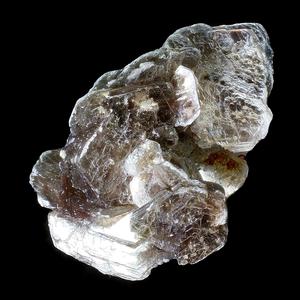
Mica is a phyllosilicate mineral that can be exfoliated into extremely thin flakes. Through processing, it is transformed into various grades, including natural mica, calcined mica, and synthetic mica, which are then manufactured into mica paper, sheets, tapes, tubes, and custom‑shaped components to suit a wide range of equipment.
✨Excellent thermal stability: Different product categories have varying temperature‑resistance ranges; some models can withstand intermittent high temperatures up to several hundred degrees Celsius without melting or dripping, and they produce low smoke with no halogens.
✨High-Temperature Insulation: Unlike most materials, which see their insulating performance degrade as temperature rises, mica maintains stable dielectric strength even at temperatures exceeding several hundred degrees Celsius, effectively preventing arc breakdown.
✨Excellent environmental adaptability: chemically stable, resistant to oils and mild acids and bases, and less prone to aging or corrosion in harsh industrial environments.
02
Beyond performance, processability is the key to widespread adoption.
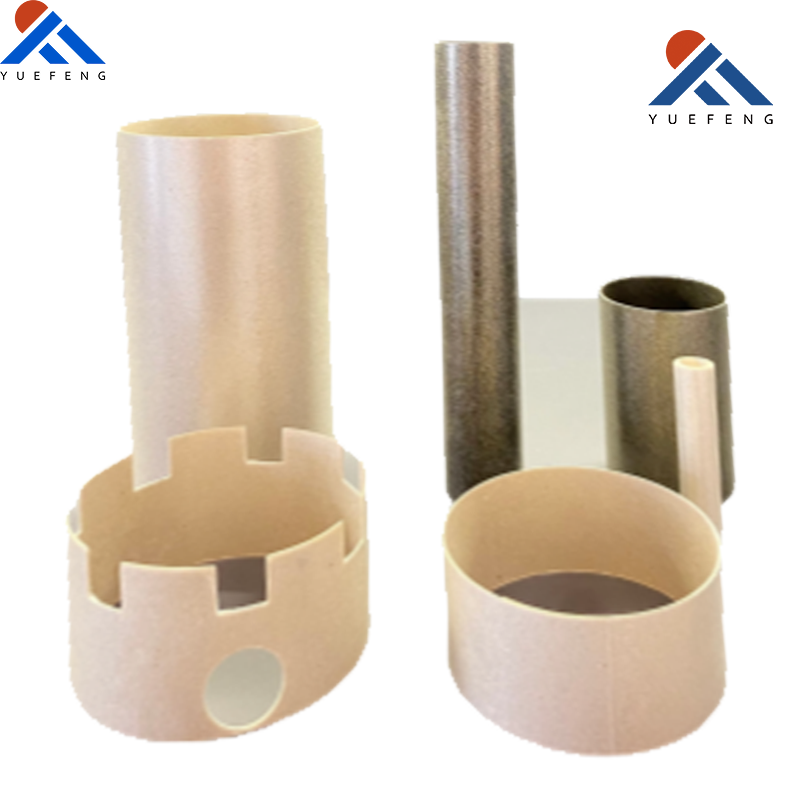

Temperature resistance alone is not enough; only when it can be seamlessly integrated into the device’s structure can it be put into practical use. Mica can be processed into ultra-thin mica tapes for cable wrapping, pressed into rigid sheets to serve as supports for heating elements, and rolled into tubular forms or stamped and molded into a wide variety of custom-shaped components. Compared with ceramic sintering, which is costly, mica offers the advantages of being easily cut, drilled, and customized into non‑standard shapes, while exhibiting both flexible and rigid properties: its soft rolls can be bent and wrapped, whereas its hard plates provide substantial structural strength, balancing electrical insulation with basic mechanical support.
03
Applications continue to expand, and traditional industries are transitioning to new energy.

🏭 Fire‑resistant cables: Mica tape serves as the fire‑resistant layer, maintaining circuit integrity under high‑temperature fire conditions; they are used in high‑rise buildings, rail transit systems, and marine cables.
🔥High-Temperature Metallurgical Equipment: Insulating lining for industrial electric furnaces, serving as an environmentally friendly alternative to protect the coil from high-temperature damage.
🌡️Electrical heating equipment: Heaters and blowers incorporate internally isolated heating components to eliminate the risk of live enclosure surfaces.
🔋 New Energy Sector: High-voltage components for new-energy vehicles and energy-storage systems, used for thermal insulation to mitigate the risk of thermal runaway.
04
A Rational Perspective: Mica Also Has Its Limits of Applicability


Mica has its own application limits; the temperature resistance of finished products is influenced by the bonding system, and performance varies significantly across different grades. Therefore, material selection should be based on the specific operating conditions.
However, in applications where high temperature and electrical insulation coexist, there are few material options that simultaneously offer thermal resistance, dielectric properties, thermal shock resistance, cost-effective processing, and reliable large-scale supply.
As new materials continue to evolve, mica remains an indispensable choice if one seeks to achieve bendability and the fabrication of complex, non‑standard shapes even under high‑temperature conditions.
Often, equipment safety hinges precisely on these seemingly unremarkable insulating auxiliary materials. When the internal temperature of a device surges, mica quietly stands guard as the final line of defense against heat and electricity.

Related Blog
Related Downloads

Company Address: Wushi Industrial Park, Xingwang Road, Pingjiang High-tech Industrial Park, Wushi Town, Pingjiang County, Hunan Province


This website supports both IPv4 and IPv6 access.