
What is synthetic mica and how does it compare to natural mica?
Published time:
2026-01-07 11:01
Source:



Synthetic mica is made in labs. Natural mica is taken from the ground. It is important to compare them. Purity, color, stability, cost, safety, and ethics are all important. These things matter to companies and people who buy products. The table below shows how they are different for the environment and ethics:
| Type of Mica | Environmental Impact | Production Costs | Ethical Concerns |
|---|---|---|---|
| Natural Mica | Lower impact | Cheaper | Possible issues |
| Synthetic Mica | Higher impact | More expensive | Fewer concerns |
Key Takeaways
- Synthetic mica is created in labs. It is very pure and always the same quality. This makes it great for things like makeup and electronics.
- Natural mica comes from the ground. It can have things mixed in that are not wanted. Its quality can change, which can change how it looks and works.
- When picking synthetic or natural mica, think about price, safety, and how it affects the earth. This helps you choose wisely.
Synthetic Mica vs Natural Mica: Definitions and Production
What Is Synthetic Mica?
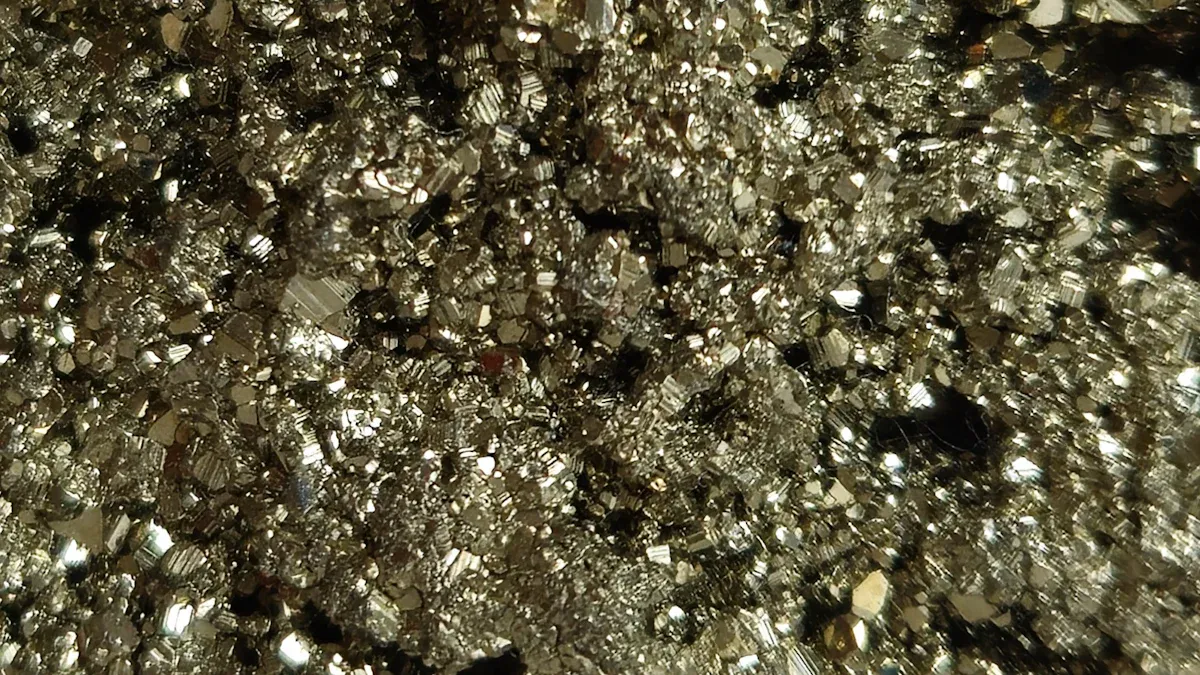
Synthetic mica is made in a lab. Scientists create it to look and act like natural mica. The lab process makes sure it is very pure and always the same. This makes synthetic mica powder good for makeup and electronics. Synthetic mica has fewer unwanted things inside. It feels smoother than natural mica. Makers can change the crystal size and shape. This helps them get even results.
Note: Synthetic mica is sometimes called "fluorphlogopite" in technical documents.
What Is Natural Mica?
Natural mica forms underground over a long time. People dig it out of rocks using big machines. They crush and clean the rocks to get mica powder. Natural mica can have other minerals mixed in. Its quality changes because of these extra things. Muscovite, phlogopite, and lepidolite are common types. These types have different colors and looks. Their chemical makeup decides how they appear.
How Each Type Is Made
Synthetic mica starts with things like quartz sand and potassium carbonate. Workers mix these in a hot glass in the lab. They cool it down so crystals can grow. This lets them control how the mica turns out. Sometimes, metal oxides are added to make it work better.
Natural mica is made by mining. Workers take out the ore and clean it. They separate mica from other stuff. Then they dry it and sort it. Sometimes, they make it even cleaner for special uses.
| Aspect | Natural Mica | Synthetic Mica |
|---|---|---|
| Origin | Mined from the earth | Produced in laboratories |
| Composition | Contains natural impurities | High purity, consistent |
| Production | Mining and processing | Chemical synthesis |
| Raw Material (Synthetic Mica) |
|---|
| Quartz Sand |
| Potassium Carbonate |
| Aluminium Oxide |
| Potassium Fluosilicate |
| Mineral Name | Chemical Formula | Description |
|---|---|---|
| Muscovite | KAl2Si3AlO10(OH,F)2 | Common in rocks |
| Phlogopite | KMg3AlSi3O10(OH,F)2 | Iron-free mica |
| Lepidolite | K(Li,Fe+2)Al3Si3AlO10(OH,F)2 | Lithium-rich |
Both types have silica, alumina, and other oxides. The table below shows what is inside:
| Element | Content (%) |
|---|---|
| SiO₂ | 38-43 |
| Al₂O₃ | 10-14 |
| Fe₂O₃ | 0.15-0.3 |
| MgO | 24-32 |
| K₂O | 9-12 |
| CaO | 0.2-0.3 |
| F | 8-10 |
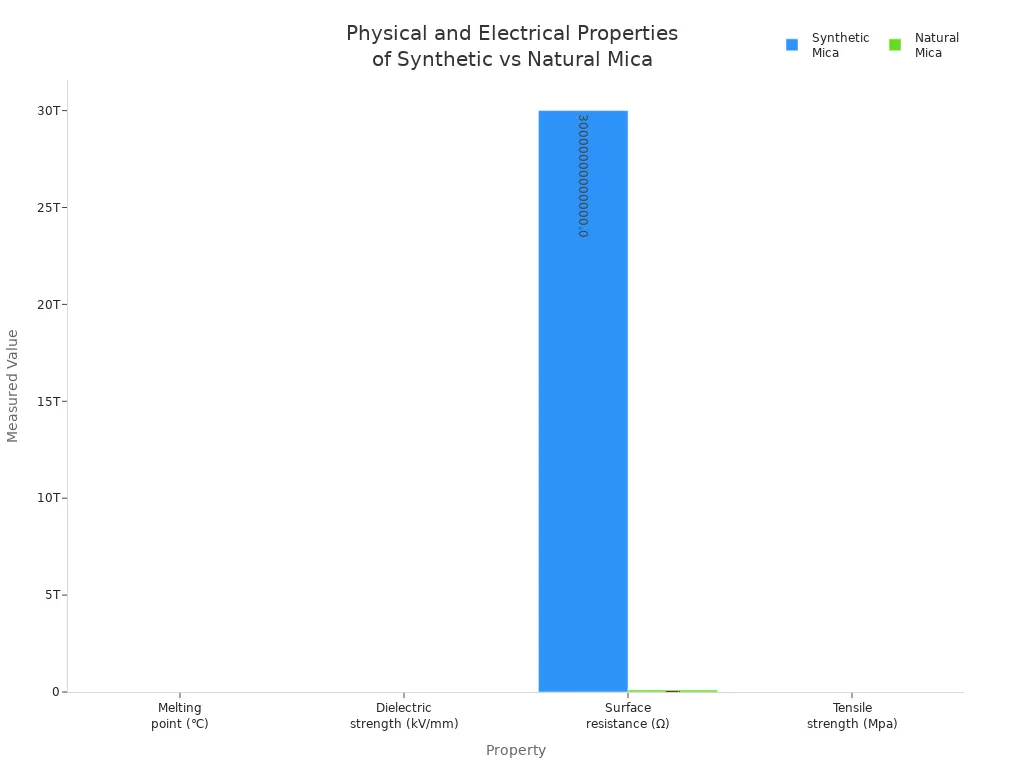
Synthetic mica is very pure and bright. It works well and looks nice. Natural mica comes in many colors and textures. It can have unwanted things inside. Both types are used in factories. Their differences come from how they are made and where they come from.
Key Differences: Properties, Performance, and Ethics

Purity and Appearance
Synthetic mica is very pure and always the same. It is made in a lab, so it does not have many extra things inside. Natural mica comes from the ground and can have other minerals mixed in. This can change how good it is and how it looks.
- Natural mica comes from mines and can have different minerals.
- Synthetic mica is made in labs and is always pure.
The color and shine are not the same for both types. Synthetic mica can look brighter and have stronger colors. This happens when makers add iron oxide or titanium oxide. Natural mica has many colors, but it can look less shiny if it has extra stuff inside.
| Feature | Synthetic Mica | Natural Mica |
|---|---|---|
| Color | Gets brighter with special coatings | Has natural color changes |
| Brightness | Looks brighter because of coatings | Shine can change if it has impurities |
Synthetic mica pieces are smoother and more even. This makes them good for makeup and paint. People like them when they want a shiny or see-through look.
Stability and Performance
Synthetic mica works better in tough places. It can handle more heat than natural mica. This makes it good for electronics and things that get very hot.
| Type of Mica | Heat Resistance |
|---|---|
| Synthetic Mica | Handles more heat |
| Natural Mica | Handles less heat |
Synthetic mica keeps heat out and does not break down easily. It can stand high heat, does not let out much gas, and does not get hurt by acids or bases. This makes it good for factories.
| Type of Mica | Max Temperature | Thermal Stability | What’s Inside |
|---|---|---|---|
| Synthetic Mica | 1100-1200 °C | Stays strong | No hydroxyl (OH) |
| Natural Mica (Muscovite) | 550 °C | Less strong | Has hydroxyl (OH) groups |
Natural mica is still useful but cannot take as much heat or chemicals as synthetic mica. This matters for jobs where things get very hot or need to stay the same.
Cost and Safety
- Price is important for many people. Raw mica ore costs $100 to $400 per ton. Mica sheets cost $20 to $200 per kilogram. Mica powder costs $10 to $50 per pound. Synthetic mica costs more because it is harder to make and uses more energy.
- Safety is also important. Natural mica can have heavy metals or other bad things. Workers in mica factories can get sick from breathing mica dust. Mica in makeup can sometimes bother your skin. But if companies follow safety rules, mica in makeup is safe for most people.
- Synthetic mica is safer and cleaner. It almost never has heavy metals or radiation. Makers test it a lot to make sure it is safe, especially in rich countries.
Ethical and Environmental Issues
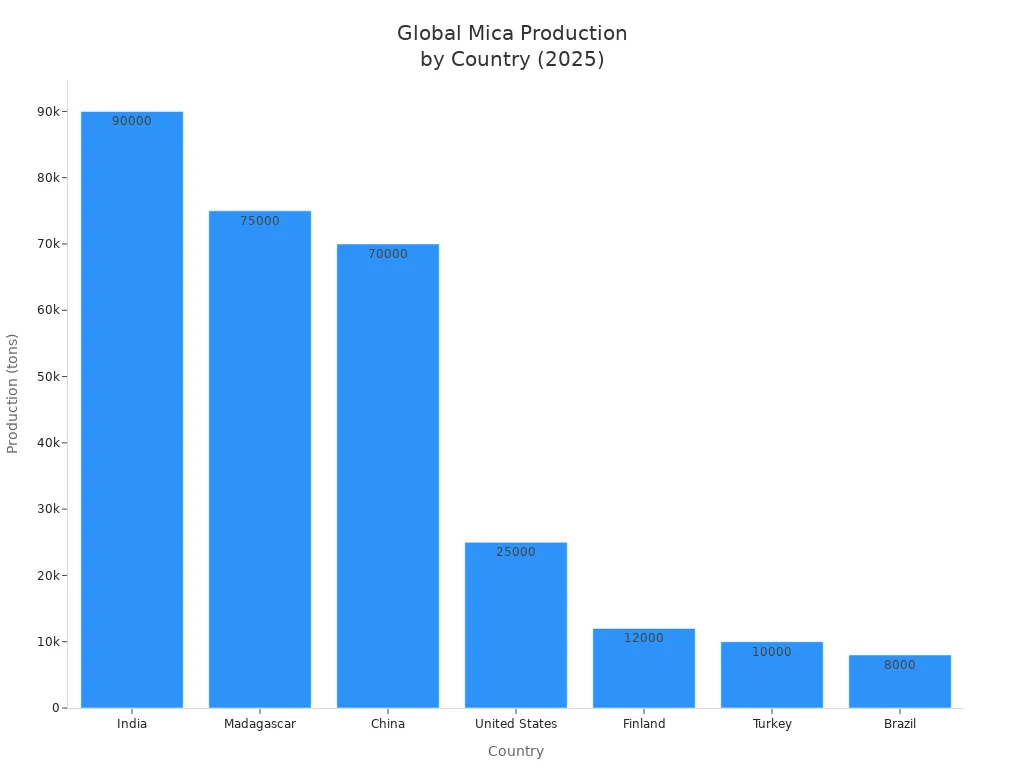
People care more about how mica is made. Mining natural mica, especially in India, can be dangerous. Some mines use child labor. About 20,000 kids work in mica mines in India. Around 25% of the world’s mica comes from illegal mines there. These mines often do not follow rules and can hurt people and nature.
- Workers can get sick from mica dust.
- Many kids work in unsafe mines in India.
- Mines can be dangerous for everyone.
- Kids miss school and stay poor because they must work.
- Illegal mines do not have rules and can hurt people.
Synthetic mica does not have these labor problems. It is made in safe factories. But making synthetic mica can hurt the environment more. It can cause up to 6.5 times more harm to nature than mining natural mica. Most synthetic mica comes from Japan and China. Shipping it far away uses more energy and makes more pollution.
Pros and Cons Summary
Here is a table that shows the good and bad things about each type:
| Aspect | Synthetic Mica | Natural Mica |
|---|---|---|
| Purity | Very pure, no heavy metals | Purity changes, can have impurities |
| Appearance | Bright, shiny, can be changed | Natural look, color changes |
| Heat Resistance | Up to 1200°C, great insulator | Up to 550°C, not as strong |
| Chemical Stability | Very strong, resists acids and bases | Not as strong, can break down |
| Cost | Costs more, uses more energy | Costs less, easy to find |
| Safety | Tested a lot, very safe | Can have bad stuff, dust is risky |
| Ethics | Made in factories, fewer labor issues | Child labor, unsafe mining |
| Environmental Impact | Hurts nature more, uses more energy | Hurts land, but less than factories |
Tip: Think about what you need and what is right when picking between synthetic mica and natural mica.
Synthetic mica is very pure and stable. This makes it good for electronics, aerospace, and cosmetics. Natural mica is still used a lot. People use it for crafts and simple insulation. It is important to think about cost, safety, and where mica comes from. Each type of mica has special benefits. What you need decides which mica is best.
FAQ
What industries use mica most often?
Electronics, cosmetics, and cars use mica a lot. Mica helps with insulation and heat resistance. It also adds shimmer to products. Makers put mica in paints and plastics. This helps them work better.
Is synthetic mica safer for skin than natural mica?
Synthetic mica has fewer bad things inside. It almost never has heavy metals. Many makeup brands pick synthetic mica. They use it for products that touch sensitive skin.
How does mica impact the environment?
Mining mica can hurt land and animals. Making synthetic mica uses more energy and resources. This means it can harm nature more.
| Type | Environmental Impact |
|---|---|
| Natural mica | Hurts land |
| Synthetic mica | Uses more energy |
Related Blog
Related Downloads

Company Address: Wushi Industrial Park, Xingwang Road, Pingjiang High-tech Industrial Park, Wushi Town, Pingjiang County, Hunan Province


This website supports both IPv4 and IPv6 access.