
Chemical Composition of Mica
Published time:
2025-08-27 16:12
Source:


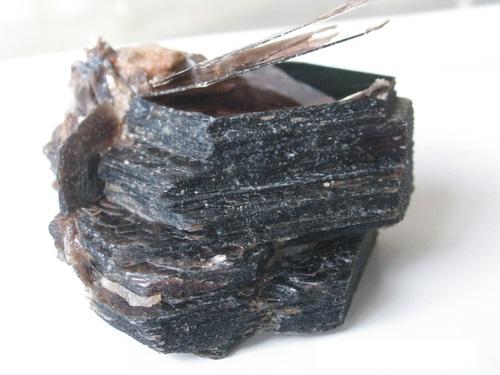
Understanding Mica Mineral Chemistry
Mica represents a fascinating group of silicate minerals with complex chemical formulations that determine their unique properties. These sheet-like minerals form through specific geological processes, resulting in distinct chemical compositions that make them invaluable across multiple industries.
The chemical formulations of mica minerals vary significantly depending on their type, with each variant displaying unique characteristics based on its specific elemental composition. Understanding these formulations helps professionals select the right mica type for their applications, whether in cosmetics, electronics, or industrial manufacturing.
This comprehensive guide explores the intricate chemistry behind mica minerals, examining their molecular structures, formation processes, and the factors that influence their chemical properties.
Muscovite Mica Chemical Formula and Structure
Muscovite stands as the most common mica mineral, with a well-defined chemical structure that exemplifies the complexity of mica formulations. The muscovite chemical formula is represented as KAl₂(AlSi₃O₁₀)(OH)₂, though this can vary slightly due to natural substitutions.
Breaking Down the Muscovite Formula
The muscovite formula reveals several key components:
Potassium (K): Acts as the interlayer cation
Aluminum (Al): Occupies both tetrahedral and octahedral sites
Silicon (Si): Forms the tetrahedral framework
Oxygen (O): Creates the basic silicate structure
Hydroxyl (OH): Provides structural stability
This chemical formula for mica specifically applies to muscovite and demonstrates the mineral's layered structure. The formula shows how aluminum substitutes for silicon in some tetrahedral sites, creating the characteristic 2:1 phyllosilicate structure.
Muscovite Crystal Structure
The muscovite crystal exhibits a monoclinic crystal system with perfect cleavage along the basal plane. This structure results from the specific arrangement of atoms according to the muscovite mica chemical formula, creating thin, flexible sheets that can be split into incredibly fine layers.
The crystal lattice consists of:
Tetrahedral sheets containing silicon and aluminum
Octahedral sheets containing aluminum and hydroxyl groups
Interlayer spaces occupied by potassium ions
Chemical Composition of Muscovite and Other Mica Types
The chemical composition of muscovite varies within specific ranges, allowing for natural substitutions that create different properties. Understanding these variations helps explain why mineral muscovite from different locations may exhibit slightly different characteristics.
Primary Mica Types and Their Chemical Formulas
| Entity | Attribute | Value |
|---|---|---|
| Muscovite | Chemical Formula | KAl₂(AlSi₃O₁₀)(OH)₂ |
| Muscovite | Potassium Content | 8-12% K₂O |
| Muscovite | Aluminum Content | 32-38% Al₂O₃ |
| Biotite | Chemical Formula | K(Mg,Fe)₃(AlSi₃O₁₀)(OH)₂ |
| Biotite | Iron Content | 15-25% FeO |
| Biotite | Magnesium Content | 8-20% MgO |
| Phlogopite | Chemical Formula | KMg₃(AlSi₃O₁₀)(OH)₂ |
| Phlogopite | Magnesium Content | 20-28% MgO |
| Phlogopite | Fluorine Content | 0-7% F |
| Lepidolite | Chemical Formula | K(Li,Al)₃(Al,Si,Rb)₄O₁₀(F,OH)₂ |
| Lepidolite | Lithium Content | 3-7% Li₂O |
| Lepidolite | Rubidium Content | 0.5-3% Rb₂O |
Understanding the Chemical Formula Mica Variations
The chemical formula mica encompasses several distinct mineral species, each with unique chemical signatures. These variations occur through isomorphous substitution, where different elements replace others in the crystal structure without changing the overall framework.
Common Substitutions in Mica Chemistry
Mica minerals undergo several types of chemical substitutions:
Octahedral Substitutions
Magnesium replacing aluminum in biotite and phlogopite
Iron replacing magnesium in biotite
Lithium replacing aluminum in lepidolite
Tetrahedral Substitutions
Aluminum replacing silicon (limited substitution)
Iron occasionally replacing aluminum
Interlayer Substitutions
Sodium partially replacing potassium
Calcium replacing potassium (rare)
Rubidium replacing potassium in lepidolite
These substitutions explain why the mica formula can vary while maintaining the basic structural framework. The degree of substitution influences the mineral's physical and chemical properties, including color, hardness, and thermal stability.
Factors Affecting Mica Chemical Formulations
Several geological and environmental factors influence the final chemical composition of mica minerals. Understanding these factors helps explain the diversity found in natural muscovite mineral specimens and other mica types.
Temperature and Pressure Conditions
The formation temperature significantly affects mica chemistry:
High-temperature formation (>600°C): Favors magnesium-rich compositions like phlogopite
Medium-temperature formation (400-600°C): Promotes muscovite formation
Low-temperature formation (<400°C): Can produce lithium-rich varieties
Pressure conditions also play a crucial role:
High-pressure environments favor aluminum-rich compositions
Lower pressures allow for more diverse substitutions
Metamorphic grade influences the degree of chemical ordering
Fluid Composition During Formation
The chemical environment during mica formation determines final compositions:
Potassium-Rich Fluids
Promote muscovite formation
Enhance potassium content in final minerals
Support high-quality crystal development
Magnesium-Rich Environments
Favor biotite and phlogopite formation
Create darker-colored mica varieties
Often associated with mafic rock environments
Lithium-Bearing Solutions
Lead to lepidolite formation
Create rare-element enriched micas
Often found in pegmatite environments
Analytical Methods for Determining Mica Chemistry
Modern analytical techniques provide precise determination of mica chemical formulations. These methods ensure accurate identification and quality assessment for industrial applications.
X-Ray Fluorescence (XRF) Analysis
XRF spectroscopy offers rapid, non-destructive analysis of major elements in mica samples. This technique excels at determining:
Potassium content variations
Silicon to aluminum ratios
Iron and magnesium concentrations
Electron Microprobe Analysis
This technique provides highly precise chemical analysis at the microscopic level, revealing:
Exact chemical formulas for individual crystals
Zoning patterns within single crystals
Minor element distributions
Inductively Coupled Plasma (ICP) Spectroscopy
ICP methods offer exceptional precision for trace element analysis, important for:
Quality control in industrial applications
Research into formation conditions
Environmental impact assessments
Industrial Applications Based on Chemical Composition
The specific chemical formulations of mica directly influence their industrial applications. Understanding these relationships helps manufacturers select appropriate mica types for specific uses.
Electronics and Electrical Applications
Muscovite mineral with high purity and specific chemical composition serves critical roles in electrical applications:
Capacitor production requires low-iron muscovite
High-temperature applications benefit from fluorine-free compositions
Electrical insulation depends on aluminum-rich formulations
Cosmetic and Personal Care Products
Chemical purity requirements for cosmetic mica include:
Low heavy metal content
Consistent particle size distribution
Specific refractive index properties
Construction and Paint Industries
Chemical composition affects performance in construction materials:
Iron content influences color stability
Aluminum content affects thermal properties
Potassium levels impact weather resistance
Future Research in Mica Chemistry
Ongoing research continues to refine our understanding of mica chemical formulations and their applications. Current investigations focus on:
Synthetic Mica Development
Scientists work to create synthetic mica with controlled chemical compositions for specialized applications:
Ultra-pure compositions for advanced electronics
Modified formulations for enhanced properties
Environmentally friendly production methods
Nanostructured Mica Applications
Research into mica chemistry at the nanoscale reveals new possibilities:
Enhanced barrier properties through controlled chemistry
Modified surface chemistry for better dispersion
Tailored compositions for specific nanocomposite applications
Conclusion
The chemical formulations of mica represent a complex but fascinating aspect of mineralogy that directly impacts their practical applications. From the well-established muscovite chemical formula to the diverse compositions found in other mica varieties, understanding these chemical relationships proves essential for both scientific research and industrial applications.
The intricate chemistry of mica minerals, governed by their specific formulations and formation conditions, continues to drive innovation across multiple industries. As analytical techniques improve and new applications emerge, the detailed knowledge of mica chemistry becomes increasingly valuable for developing advanced materials and technologies.
Whether you're working with mineral muscovite in electronics, exploring biotite for construction materials, or researching lepidolite for lithium extraction, the chemical formulations provide the foundation for understanding and optimizing these remarkable minerals' performance in countless applications.
Previous Page
Next Page
Related Blog
Related Downloads

Company Address: Wushi Industrial Park, Xingwang Road, Pingjiang High-tech Industrial Park, Wushi Town, Pingjiang County, Hunan Province


This website supports both IPv4 and IPv6 access.