
The Silent Guardian of New Energy Safety: How Critical Are High-Temperature-Resistant Insulating Materials?
Published time:
2026-11-05 14:45
Source:


High-Temperature Insulating Materials: Core Components for New Energy Safety
As the new energy industry experiences rapid growth, electric vehicles, energy storage power stations, rail transit systems, and high-power electrical equipment are undergoing continuous iteration and upgrades. Higher voltage levels, faster charging, and higher energy density have become key industry trends, making operating conditions inside equipment increasingly complex and raising risks such as localized temperature rises, arc flash, and thermal shock.
Many people focus on core components like batteries, electronic controls, and motors, but often overlook a seemingly inconspicuous yet critically important material—high-temperature-resistant insulating materials. Hidden inside equipment, they serve as the electrical system’s “safety protective suit” and are an indispensable foundational component for ensuring the stable operation of the entire system.
In the era of high voltage, insulating materials face multiple challenges.
In new energy applications, insulating materials must simultaneously address multiple demanding challenges:
✅ Thermal shock: Fast charging and high-current charge/discharge cycles cause sustained temperature increases, and under abnormal conditions, the device may also experience brief exposure to extreme heat.
✅ High-voltage insulation: As 800V high-voltage platforms become more widespread, materials must maintain stable dielectric properties to prevent short circuits and arc faults.
✅ Environmental aging: Repeated high–low temperature cycling, electrolyte corrosion, and vibration/compression do not cause rapid degradation of material properties;
✅ Environmentally friendly and low-smoke: In the event of thermal anomalies, minimize the release of toxic fumes to facilitate safe handling.
Traditional organic polymer insulating materials can operate reliably under normal conditions, but they tend to soften, melt, or carbonize at extreme high temperatures, leading to a rapid decline in insulation performance. Inorganic high-temperature-resistant insulating materials, exemplified by mica, leverage the inherent chemical and physical stability of the mineral itself and are increasingly being adopted in a growing range of new energy applications.
Inorganic mica materials, building multi-layered security defenses
Mica is an inorganic mineral that, through papermaking, reinforcement, and composite molding processes, can be manufactured into various forms such as mica tape, mica sheets, and custom-shaped mica components, thereby meeting the assembly requirements of different parts.
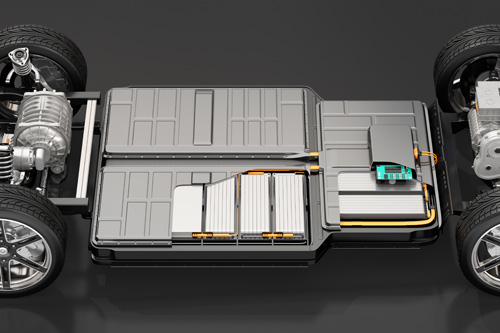
In the field of power batteries for new energy vehicles, mica products can be positioned between cells, on module end faces, and on the inner side of battery pack top covers. When a single cell experiences thermal runaway, the mica layers help slow heat transfer to adjacent cells, delaying thermal propagation. At the same time, they resist high‑temperature molten slag and gas flow ejected during cell venting, maintaining electrical insulation and providing occupants with critical escape time, thereby meeting domestic safety standards for power batteries. Available in both rigid and flexible forms, these products can serve as flat insulating barriers or be die‑cut and stamped into custom shapes to accommodate cylindrical, prismatic, and other battery pack configurations.
Energy storage system application scenarios: industrial and commercial energy storage, and containerized energy storage systems, are subjected to high‑current charge and discharge cycles over extended periods. Mica insulation components are used for busbars inside the pack, cell isolation, and fire barriers within cabinets, maintaining dielectric strength under elevated temperatures to reduce the risk of leakage and short circuits. The material is resistant to electrolyte corrosion and can withstand thousands of thermal cycles alongside the energy storage equipment, meeting the long‑life operational requirements of such systems.
Fire‑resistant Cables for Rail Transit and High‑rise Buildings Fire‑resistant cables used in rail transit systems and high‑rise buildings employ mica tape wrapped around the conductors. In the event of a fire, the outer organic sheath burns and chars, while the mica forms a stable inorganic insulating layer that maintains circuit integrity for a period of time, ensuring uninterrupted power to fire‑fighting and emergency circuits and facilitating personnel evacuation and rescue operations.


Not only heat-resistant, but its overall performance also meets diverse needs.
In addition to heat resistance and insulation, mica-based insulating materials possess numerous properties well-suited for new energy applications:
Low-smoke, halogen-free: When exposed to high temperatures, it emits minimal smoke and does not produce large amounts of corrosive, toxic substances, aligning with the environmentally friendly design principles for new energy equipment.
Mechanical plasticity: It can be formed into soft, thin sheets or processed into high-strength rigid panels, supporting die-cutting, roll forming, and stamping, making it suitable for tight and irregular installation spaces.
Stable performance: The mineral-based substrate is resistant to aging and pulverization, and its dielectric strength is relatively insensitive to temperature changes, making it suitable for use throughout the equipment’s entire lifecycle.
Wide product range: phlogopite, muscovite, synthetic mica, and calcined mica. Different substrates correspond to different temperature ratings, making it easy for projects to select the appropriate type based on requirements.

Amid the wave of new materials, the value of foundational materials is being reappreciated.
The entire new‑energy industry chain involves not only visible components like vehicle manufacturers and batteries, but also relies heavily on the iterative advancement of countless foundational materials. High‑temperature‑resistant insulating materials serve as a “hidden armor” for equipment, operating quietly under normal conditions while providing critical protection when risks arise.
As high-voltage platforms continue to evolve, energy storage capacity expands, and rail transit projects proliferate, market demands for the thermal stability, machining precision, and consistency of insulating components are steadily increasing. Inorganic high-temperature-resistant insulating materials will likewise undergo ongoing process optimization in tandem with industry development, enabling the creation of more customized forms to meet the specific requirements of diverse niche applications.
Technology advances, safety comes first. This humble insulating material is, in its own way, helping the new energy industry move forward steadily.



Related Blog
Related Downloads

Company Address: Wushi Industrial Park, Xingwang Road, Pingjiang High-tech Industrial Park, Wushi Town, Pingjiang County, Hunan Province


This website supports both IPv4 and IPv6 access.