
Thermal Protection for New-Energy Batteries: Mica Materials Create a High-Temperature Safety Barrier
Published time:
2026-10-07 10:23
Source:


Thermal Protection for New-Energy Batteries: How Mica Materials Build a High-Temperature Safety Barrier
As the new‑energy industry accelerates, battery safety has become an indispensable core issue for achieving high‑quality development. With continuous advances in energy density, the risk of thermal runaway under abnormal operating conditions has drawn intense attention across the sector. When a cell experiences thermal runaway, it rapidly releases substantial heat, which quickly propagates to adjacent cells and modules, easily triggering a cascading chain reaction. To prevent heat propagation and safeguard the overall safety of the battery system, high‑temperature‑resistant insulating and protective materials play a critical role. Mica‑based materials, owing to their unique physicochemical properties, are increasingly emerging as key components in battery thermal‑protection systems.

01
Building on materials, fortifying the battery safety defense line.
As the new‑energy industry accelerates, battery safety has become an indispensable core issue for achieving high‑quality development. With continuous advances in energy density, the risk of thermal runaway under abnormal operating conditions has drawn intense attention across the sector. When a cell experiences thermal runaway, it rapidly releases substantial heat, which quickly propagates to adjacent cells and modules, easily triggering a cascading chain reaction. To prevent heat propagation and safeguard the overall safety of the battery system, high‑temperature‑resistant insulating and protective materials play a critical role. Mica‑based materials, owing to their unique physicochemical properties, are increasingly emerging as key components in battery thermal‑protection systems. 
02
Practical requirements for battery thermal protection: prevent thermal runaway propagation and maximize the safety window.
In accordance with relevant safety standards for power batteries, once a single cell experiences thermal runaway, the battery system must maintain a defined safety time window to delay the onset of ignition and explosion, thereby buying valuable time for personnel evacuation and emergency response.
The propagation pathways of thermal runaway are primarily two-fold: first, heat conduction, where high temperatures are directly transferred through the cell casing and structural components to adjacent cells; second, electrical hazards, in which insulation breakdown under high‑temperature conditions can easily trigger short circuits, further exacerbating the situation. These requirements impose multifaceted and comprehensive demands on protective materials: they must exhibit excellent high‑temperature resistance and maintain structural integrity at elevated temperatures; preserve stable electrical insulation properties; generate low smoke and low toxicity under high‑temperature conditions; and, at the same time, fit within the compact packaging space of the battery pack while balancing mechanical toughness and processability.
A wide variety of thermal protection materials are available on the market, each with its own strengths and limitations. Some polymeric foams have limited temperature resistance and are prone to deformation under high‑temperature conditions; aerogels offer excellent thermal insulation but suffer from relatively low mechanical strength; ceramic‑filled silicone rubbers deliver well‑rounded performance, though their cost can be a significant constraint. Mica‑based insulating materials strike a favorable balance among temperature resistance, electrical insulation, structural stability, and processability, and are increasingly being adopted in power‑battery and energy‑storage applications.

03
The intrinsic characteristics of mica materials: layered minerals provide a protective foundation.
Mica is a phyllosilicate mineral, classified into varieties such as phlogopite, muscovite, and synthetic mica. Its layered crystalline structure endows it with inherent material advantages: excellent electrical insulation, high thermal stability, chemical inertness, resistance to acid and alkali corrosion, and minimal release of toxic fumes under high-temperature conditions.
Temperature resistance: Mica grades exhibit varying temperature‑resistance ranges. Phlogopite, calcined mica, and synthetic mica can withstand short‑term high‑temperature shocks from several hundred to over a thousand degrees Celsius, enduring the extreme heat released instantaneously during thermal runaway in battery cells while maintaining structural integrity and resisting rapid melting or collapse.
Dielectric Stability: The layered structure of mica inhibits charge conduction, ensuring excellent insulation resistance under both normal and elevated temperature conditions. This effectively mitigates the risk of high‑voltage short circuits between cells and within modules, providing dual protection—thermal insulation and electrical isolation.
Environmental friendliness and reliability: The heating process generates minimal smoke and releases few harmful substances; mica products that have undergone process modification exhibit moderate resistance to impact and bending, making them suitable for battery pack applications under complex conditions such as vibration and compression.
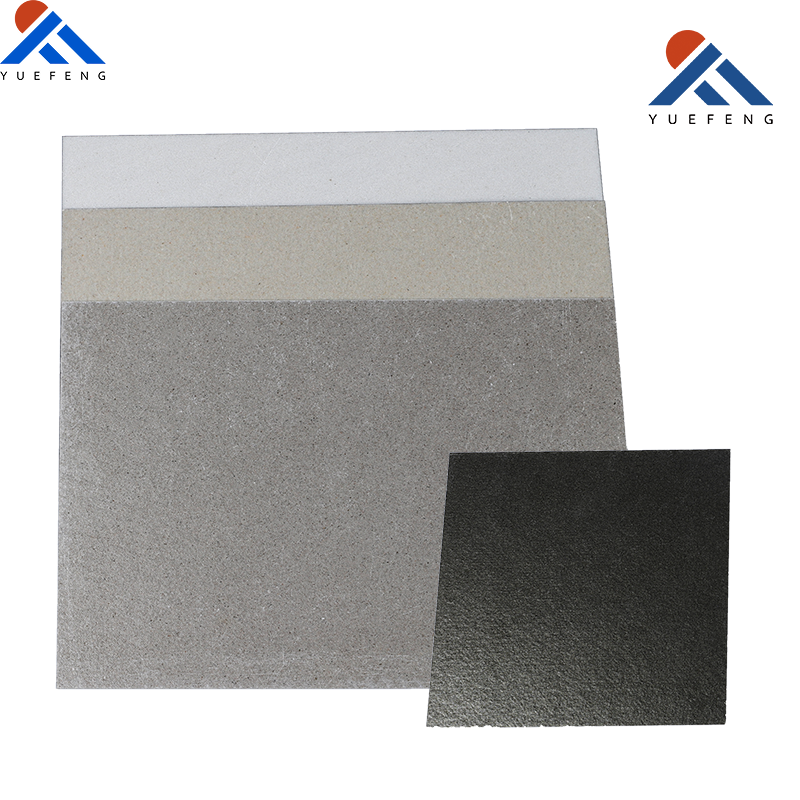
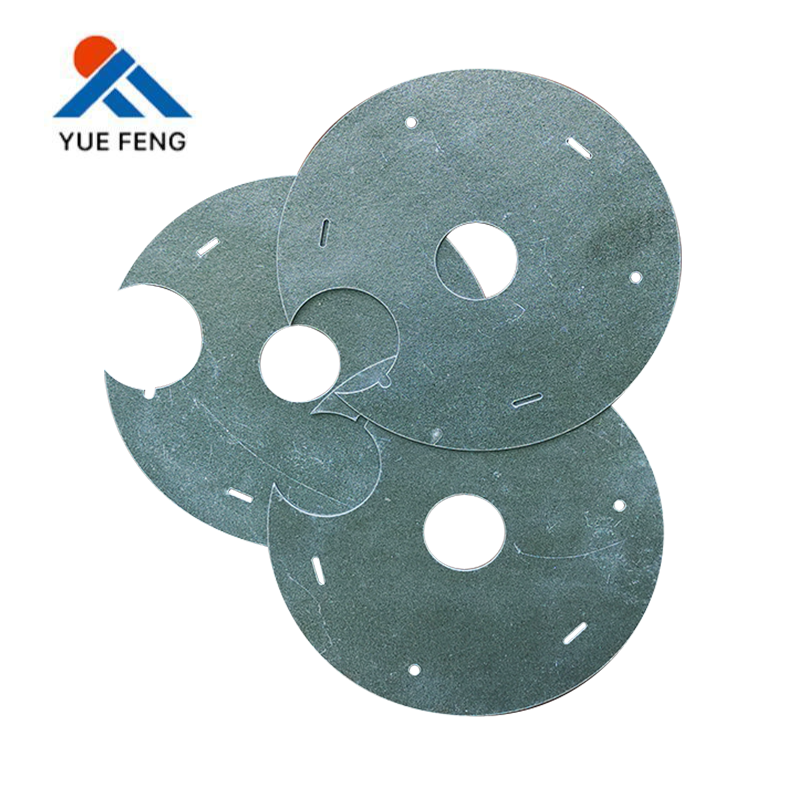
Raw mica ore sheets must undergo multiple processing steps—including pulping, papermaking, and composite pressing—to be transformed into forms such as mica paper, mica boards, and flexible mica composites, thereby becoming suitable for internal battery assembly. By optimizing substrate selection, adhesive systems, and fiberglass reinforcement processes, it is possible to produce rigid thermal insulation panels, flexible thin sheets, and custom‑shaped stamped components, meeting the diverse assembly requirements of cell separators, module side panels, and protective top covers for battery packs.

04
In battery systems, how does mica form a multi-layered high-temperature safety barrier?
1. Prevents lateral thermal propagation between cells.
Mica thermal insulation sheets are strategically placed in the gaps between battery cells. When a cell experiences thermal runaway, the mica layer helps mitigate heat transfer to adjacent cells, slowing the rate of temperature rise in neighboring cells and reducing the likelihood of a cascading thermal runaway event. Flexible mica sheets can conform to the curved surfaces of cylindrical and prismatic cells, while rigid mica plates are typically used for isolation and protection between large prismatic cells.
2. Between modules, isolate high-temperature heat conduction at the module level.
The battery pack is assembled from multiple modules, with mica insulation sheets installed on the module side and end plates. Even if a single module experiences thermal abnormalities, the mica material can contain the high temperature, confining the risk to the affected module and preventing rapid heat propagation throughout the entire battery pack.
3. Between the battery pack’s top cover and the cells, it provides resistance to upward thermal shock.
When thermal runaway occurs, the cell’s vent valve ejects high‑temperature gases and molten materials upward. A mica‑based protective layer is positioned between the cell and the battery pack’s top cover, where it endures the scouring action of hot gas flows, safeguarding the housing and external components while maintaining insulation integrity in the high‑voltage circuit. With the widespread adoption of integrated battery technologies such as CTP and CTC, cells are mounted directly against the housing, further expanding the application scope of mica‑based protective materials.
4. High-voltage harness and busbar auxiliary insulation protection
Mica‑based composite tapes can be used to encapsulate and protect high‑voltage wire harnesses and busbars, maintaining insulation integrity when high‑voltage components inside a battery are exposed to brief periods of elevated temperatures, thereby mitigating the risk of short circuits caused by heat.
Mica materials constitute an important component of the battery safety system, but they do not by themselves address all battery safety challenges. Comprehensive battery safety requires the coordinated integration of cell design, a Battery Management System (BMS), pressure‑relief mechanisms, and a variety of thermal‑insulating and flame‑retardant materials, together forming a holistic solution.


05
Process Iteration: From Basic Sheets to Customized Composite Mica Products
Native mica paper has inherent performance limits, so the industry continuously refines mica products through composite modification to enhance their overall performance. By reinforcing one or both sides with fiberglass cloth and high‑performance films, the tear resistance and flexural strength of mica‑based components are improved; adjusting inorganic binder formulations reduces thermal weight loss at elevated temperatures, further optimizing heat‑resistance; and processes such as molding, stamping, and laser cutting enable the fabrication of custom‑shaped, hollow‑out structural parts that seamlessly fit the complex internal mounting spaces of battery packs, thereby minimizing on‑site secondary machining.
Natural mica and synthetic mica also follow distinct application pathways: synthetic mica has lower impurity levels and superior high‑temperature resistance and insulation performance, making it well suited for applications with stringent safety requirements.
06
Industry Development Trends: Meeting the Safety Requirements of Energy Storage and Next-Generation Batteries
Beyond new‑energy vehicles, energy‑storage battery systems also face thermal‑safety challenges. With large numbers of cells in a storage system, the risk of thermal runaway spreading between clusters is particularly pronounced, and mica insulation materials are increasingly being adopted within energy‑storage packs. Looking ahead, as semi‑solid and solid‑state batteries continue to advance, mica—thanks to its stable high‑temperature resistance and excellent insulating properties—holds potential for applications in areas such as isolation and protection in solid‑state batteries, as well as wire‑harness insulation.
Market demand is also raising the bar for the mica industry chain: batch-to-batch performance consistency, thickness precision, impurity control, low volatility, and reduced ion leaching have all become key criteria for product evaluation. The industry continues to refine its processes, balancing protective performance, weight reduction, and cost efficiency to deliver enhanced safety benefits within the constrained space of a battery pack.

07
Building on materials, fortifying the battery safety defense line.
There is no single solution to battery safety; rather, it is a systems‑level engineering effort that integrates battery cells, structural design, thermal management, and protective materials. Mica, with its inherent advantages of high temperature resistance, excellent electrical insulation, and chemical stability, serves as a high‑temperature safety barrier within the battery, slowing the propagation of thermal runaway and buying valuable time for safe handling.
As the new‑energy industry continues to advance, thermal‑protection materials will undergo ongoing technological iterations. Mica‑based composite materials will be further refined in tandem with the development of integrated batteries and large‑scale energy‑storage systems, thereby delivering even greater value in safeguarding the safety of next‑generation battery technologies.

Previous Page
Related Blog
Related Downloads

Company Address: Wushi Industrial Park, Xingwang Road, Pingjiang High-tech Industrial Park, Wushi Town, Pingjiang County, Hunan Province


This website supports both IPv4 and IPv6 access.