
W/mK Meaning: Understanding Thermal Conductivity
Published time:
2025-08-26 11:03
Source:


W/mK Meaning and Its Importance in Heat Transfer
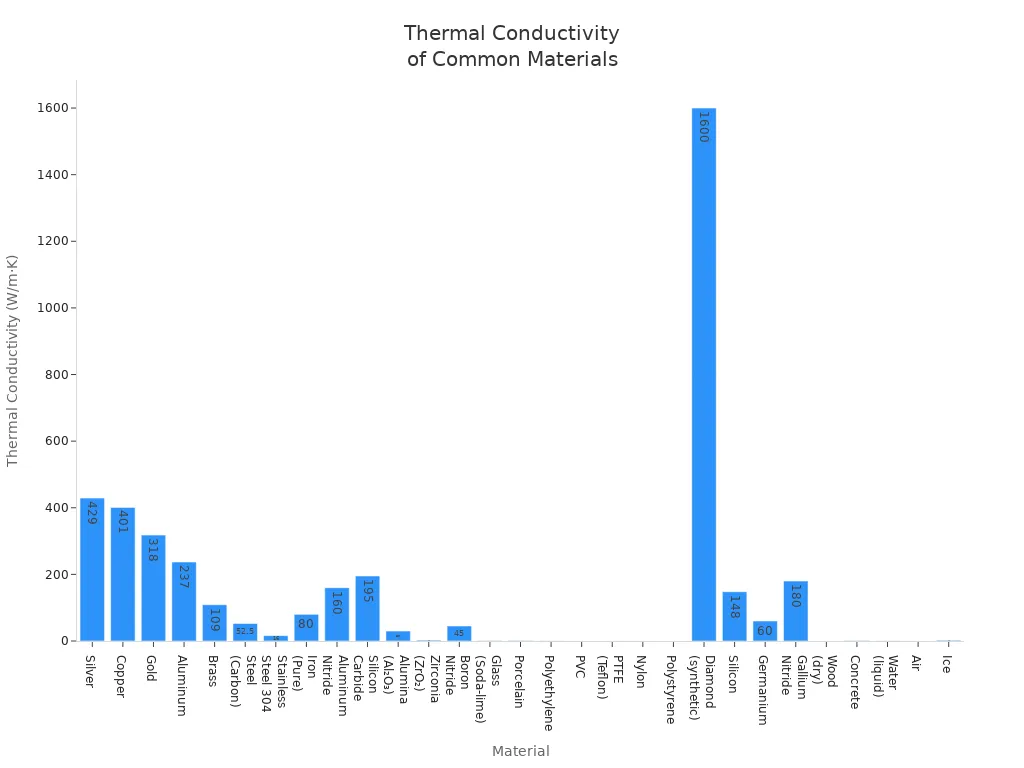
W/mK stands for Watts per meter-Kelvin, the unit that shows how easily heat moves through a material. If you think of heat like water flowing through pipes, materials with high W/mK values let heat pass quickly, just like wide pipes let water rush through. Materials with low values slow heat down, acting like narrow pipes. Take a look at the chart below to see how different materials compare:
Knowing the W/mK Meaning helps you choose the right material for keeping things cool or warm.
Key Takeaways
W/mK means Watts per meter-Kelvin. It is a unit that shows how fast heat moves through things. Materials with high W/mK values, like metals, let heat move quickly. This makes them good for cooking and electronics. Low W/mK values mean the material is a good insulator. Good insulation keeps homes warm in winter and cool in summer. Picking the right material by its W/mK value can save energy. It also helps lower harm to the environment. Knowing about W/mK helps us choose materials for many uses. This includes building insulation, cars, and airplanes.
W/mK Meaning
Unit Breakdown
When you see W/mK, it means watts per meter-kelvin. This unit shows how well a material lets heat move through it. Each part of the unit tells us something important:
Watt (W): This shows how much heat energy moves each second.
Meter (m): This is the distance heat travels in the material.
Kelvin (K): This is the temperature difference across the material.
W/mK helps us know how much heat goes through a material if it is one meter thick and has a one-degree temperature difference. If a material has a W/mK value of 1, then a cube that is one meter on each side will let one watt of heat move for every degree of temperature difference.
The formula for heat transfer by conduction is: Q/t = kA((T1-T2)/l) Q/t is the rate of heat transfer. k is thermal conductivity in W/mK. A is the area. T1-T2 is the temperature difference. l is the thickness. This formula shows why the W/mK Meaning is important for finding out how much heat moves through a material.
You will see W/mK values in tables or charts when you compare materials. Scientists and engineers use world standards to make sure these numbers are correct and easy to check. For example:
| Standard | Description |
|---|---|
| ISO 8302 | This is the standard for measuring thermal conductivity with a guarded hot plate |
| ASTM C177 | This is the test method for thermal conductivity using a guarded hot plate |
Thermal Conductivity Explained
Thermal conductivity is how well a material lets heat move through it. The W/mK Meaning helps you see how fast heat can travel in different materials. If you touch a metal spoon and a wooden spoon, the metal feels colder. This is because metal has a higher W/mK value, so it takes heat from your hand faster.
Heat moves in three ways: conduction, convection, and radiation.
In conduction, heat moves because particles vibrate and bump into each other.
Metals have free electrons, so heat moves fast in them. Wood and plastic do not have free electrons, so heat moves slowly.
You can use the W/mK Meaning to compare materials:
Metals: These have high W/mK values. Copper, aluminum, and silver are examples. They move heat well and are used in pans and electronics.
Ceramics: These usually have lower W/mK values than metals. Some, like aluminum nitride, can still conduct heat well. Ceramics are used where you need heat resistance and insulation.
Polymers: These have low W/mK values. Polyethylene and polystyrene are examples. They are good insulators and are used in foam cups and building insulation.
"The rate of heat transfer goes up if the thermal conductivity, area, or temperature difference goes up. It goes down if the material is thicker."
Thermal conductivity is also linked to other properties, like thermal diffusivity. If a material has high thermal conductivity and does not store much heat, it spreads temperature changes fast. If it has low conductivity, it keeps heat longer and slows down temperature changes.
Knowing the W/mK Meaning helps you pick the right material. You can choose to keep heat in or let it out, depending on what you need.
Importance in Heat Transfer
Conductors vs. Insulators
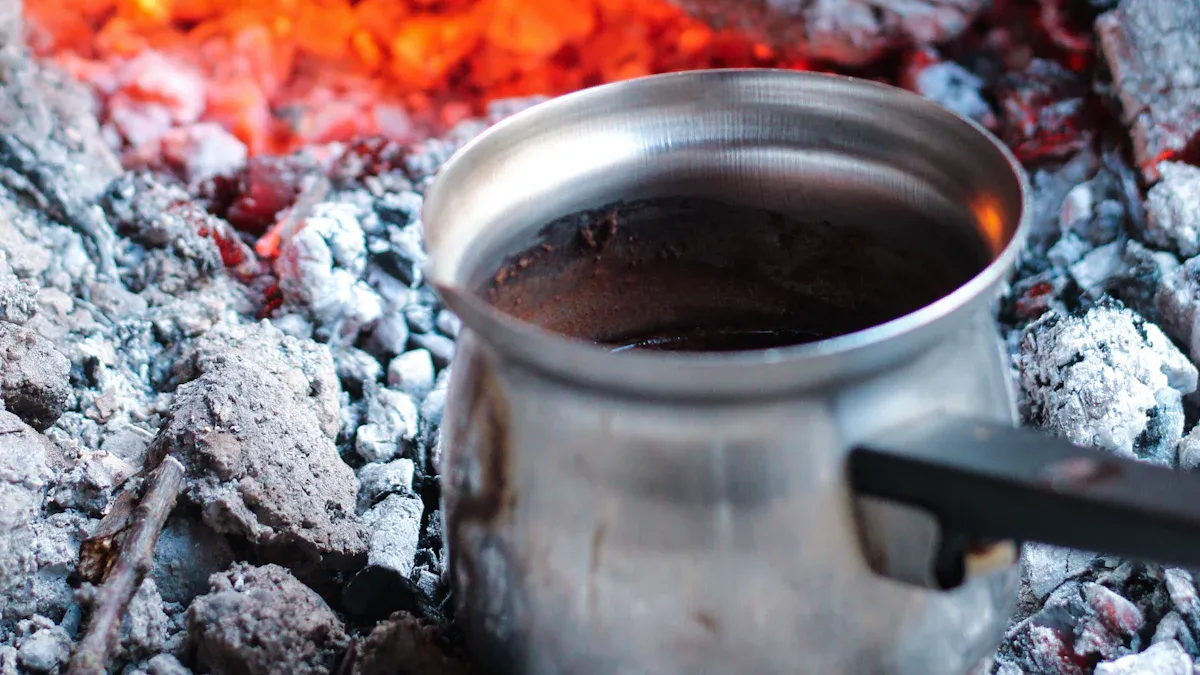
W/mK values are important for heat transfer. Conductors have high W/mK values. They let heat move fast. Metals like stainless steel are conductors. Insulators have low W/mK values. They slow down heat flow. Foam and insulation boards are insulators.
Here is a simple table to compare:
| Material | Thermal Conductivity (W/mK) |
|---|---|
| Stainless Steel | 19 |
| Insulation Board | 0.7 |
A metal spoon feels cold when you touch it. It takes heat from your hand quickly. That is because of its high W/mK value. A foam cup keeps your drink warm. It does not let heat out easily. Knowing this helps you pick the right material.
Tip: Pick conductors to move heat away fast, like in a frying pan or computer. Pick insulators to keep heat in, like in a house wall or winter jacket.
Role in Material Selection
You should think about W/mK Meaning when picking materials for projects with heat. Here are some key points:
Thermal conductivity shows how well heat moves in a material.
High thermal conductivity means heat moves better. This is needed in electronics to keep things cool.
Low thermal conductivity means better insulation. You want this in roofs or walls to keep buildings warm or cool.
Engineers check W/mK values to choose the best material.
The material you pick can also help the environment. Good insulation can save energy and lower carbon emissions. Some insulation, like cellulose fiber, is better for the planet. You should also think about how the material is made and what happens when you are done with it.
Choosing the right W/mK value helps you control heat, save energy, and protect the earth. The W/mK Meaning helps you make smart choices for comfort, safety, and saving energy.
Applications
Electronics Cooling
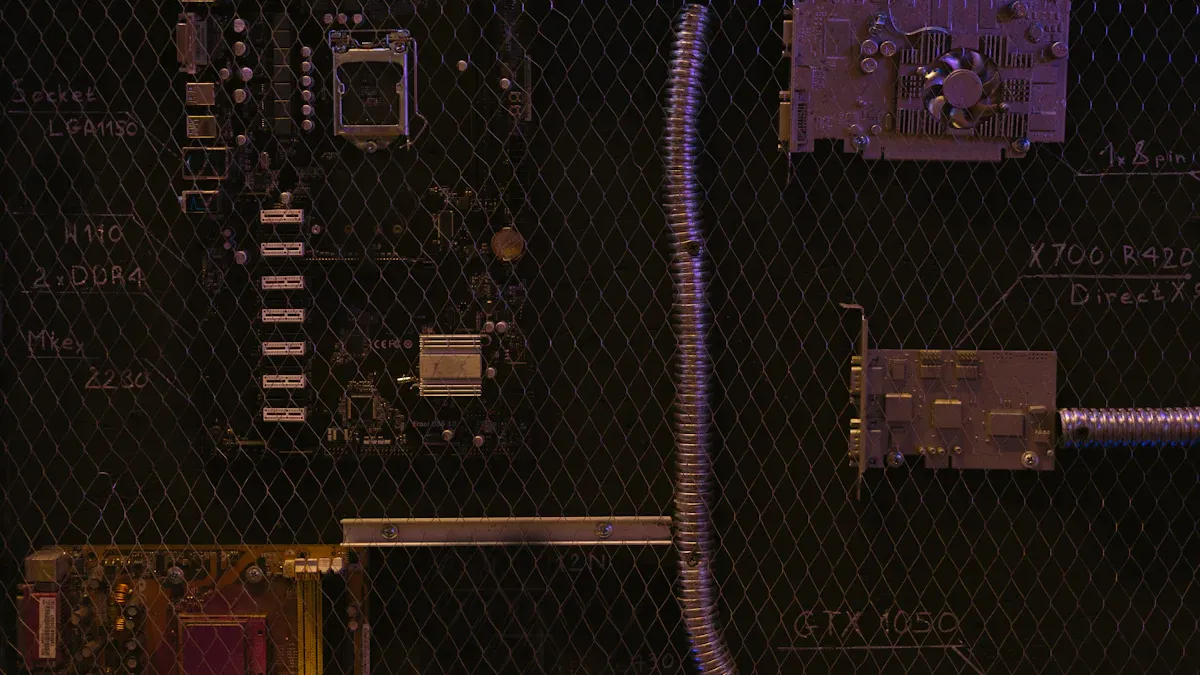
You use electronics like phones and computers every day. These devices get hot when you use them. If heat is not managed, devices can break. Materials with high W/mK values move heat away fast.
Engineers pick materials such as boron nitride and aluminum nitride. They also use carbon nanotube and graphene for cooling.
Thermal interface materials fill tiny spaces between surfaces. This helps heat move better and lowers resistance.
Measuring thermal conductivity helps designers choose the best cooling materials.
Picking materials with higher W/mK keeps devices cool. This helps them work well and last longer. Good heat control makes electronics safe and reliable.
Tip: Devices with good cooling run faster and last longer. They do not overheat as easily.
Building Insulation
You want your house warm in winter and cool in summer. Insulation with low W/mK values slows heat movement. This saves energy and money.
| Insulation Material | Thermal Conductivity (W/mK) |
|---|---|
| PU | 0.025 |
| EPS | 0.036 |
| GW | 0.0315 |
| UFF | 0.0358 |
| EP | 0.044 |
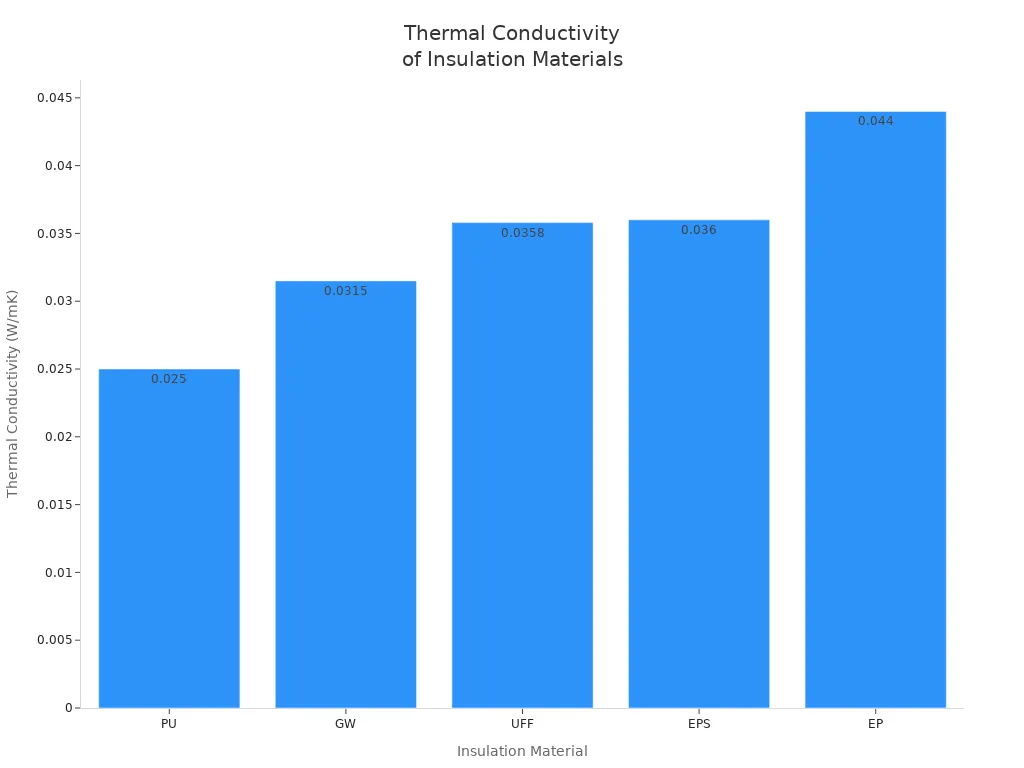
Most insulation has W/mK values from 0.024 to 0.07. Lower numbers mean better insulation. Picking the right material keeps your home comfy and lowers bills.
Automotive and Aerospace
Cars, planes, and rockets get very hot or cold. Heat must be controlled to protect engines and people. Engineers choose materials with the right W/mK for each part.
High W/mK materials cool engines and brakes quickly.
Low W/mK materials keep cabins warm and protect electronics.
Picking the right thermal conductivity makes vehicles safer and better.
This leads to safer cars and more reliable planes. Knowing about W/mK helps you make smart choices for travel.
Measurement and Factors
How W/mK Is Measured
There are different ways to measure thermal conductivity (W/mK). Each way works best for certain materials or uses. Here are some common ways to do it:
Guarded hot plate method: You put two blocks of the material around a heated plate. This method is very accurate. It takes a long time and needs special tools.
Flash method: You give the sample a quick burst of heat. Then you see how fast the heat moves through it. This way is fast and used for many materials.
Transient plane source (TPS) method: You place a sensor between two pieces of the material. The sensor heats up and checks how the heat spreads.
Dual slab method: This new method uses two slabs. It is simple and gives good results.
| Method | Description |
|---|---|
| Guarded hot plate | Two blocks go around a hot plate to check heat flow. |
| Flash method | A heat pulse goes through the sample to watch heat movement. |
| Transient plane source | A sensor heats up between two pieces and tracks heat spread. |
Note: You need to set up sensors right and prepare samples carefully for good results. Using thermal grease with probes can help you get better numbers. Some probes, like dual-needle types, might not show the real thermal conductivity.
Measuring composite or nanomaterials can be tricky. Nanoparticles can stick together and make results less true. You must mix and prepare these samples with care.
Influencing Factors
Many things can change a material’s W/mK value. You should know these things when you compare or pick materials:
Material composition: Pure metals usually have higher W/mK than alloys or impure materials. If a material has missing atoms or problems, heat does not move well.
Temperature: When temperature changes, thermal conductivity changes too. At 20°C, some materials have low conductivity because they are not wet enough. At 100°C, more water can help heat move better. At 180°C, the structure can get weak and lower the value.
Structural defects: Cracks or missing atoms in a material make heat flow drop. More problems mean lower W/mK.
Sample condition: How you make and handle the sample matters. Even samples give better results.
| Factor | Effect on W/mK |
|---|---|
| Impurities/Defects | Lowers thermal conductivity |
| Higher temperature | Can raise or lower W/mK, based on the material |
| Nanoparticle clumping | Makes conductivity lower in composites |
Tip: You must follow world rules and check your tools. This helps your results match other labs everywhere.
You now know that W/mK shows how heat moves in materials. This helps you choose the best material for cooling, insulation, or clothes.
New research says magnetic fields and nanofluids help heat move better.
Clothing makers use W/mK to make fabrics more comfortable.
New things like silicone composites and graphene help control heat.
| Resource Title | Description |
|---|---|
| Thermal Conductivity and Thermal Resistance | This video shows how to find thermal conductivity and resistance in building parts. |
| Dramatic Demonstration of Thermal Conductivity and Specific Heat Capacity | In this demo, students see copper’s high thermal conductivity and low heat capacity. |
Check out these resources to learn more about thermal conductivity. This can help you make better choices every day.
FAQ
What does a high W/mK value mean?
A high W/mK value means the material lets heat move through it quickly. You can use these materials when you want to cool things down fast, like in computer parts or cooking pans.
Why do some materials feel colder than others?
You feel some materials as colder because they take heat from your skin faster. Metals have high W/mK values, so they pull heat away quickly. Wood or plastic feels warmer because they slow down heat transfer.
How do you find the W/mK value of a material?
You can check tables or charts for common materials. Scientists use special tools and tests, like the guarded hot plate method, to measure W/mK. You can ask a lab to test unknown materials.
Can W/mK change with temperature?
Yes, W/mK can change when the temperature changes. Some materials conduct heat better at higher temperatures. Others lose their ability to move heat as they get hotter. Always check the temperature range for the material’s W/mK value.
Related Blog
Related Downloads

Company Address: Wushi Industrial Park, Xingwang Road, Pingjiang High-tech Industrial Park, Wushi Town, Pingjiang County, Hunan Province


This website supports both IPv4 and IPv6 access.