
Exploring the Differences and Applications of Mica vs Quartz
Published time:
2025-09-01 10:15
Source:


Mica and quartz are two of the most common minerals found on Earth, widely used across various industries. Whether in construction, electronics, chemicals, or other fields, these minerals play crucial roles. While both are natural minerals, mica and quartz differ significantly in terms of composition, physical properties, applications, and cost. Understanding these differences is essential for selecting the right material for your specific needs.
In this article, we will dive deep into the basic concepts of mica and quartz, compare their physical properties, explore their common applications, examine cost factors, and highlight their advantages and disadvantages in various fields. Whether you're looking to learn more about these materials or trying to make an informed decision for your project, this guide will provide valuable insights.
Mica vs Quartz: Basic Concepts
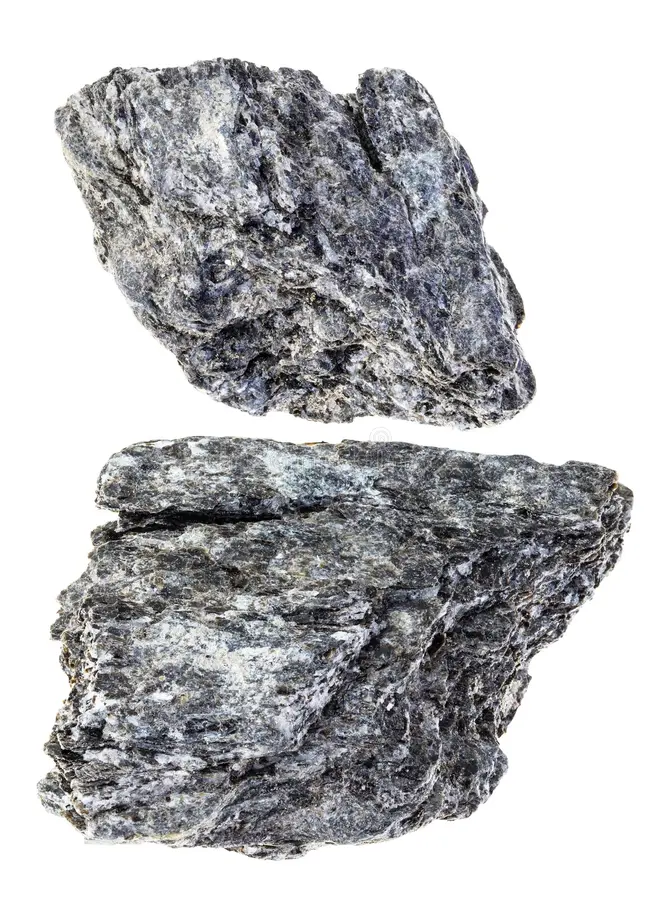
Mica: Definition and Characteristics
Mica is a group of silicate minerals that have a unique layered structure. This structure allows mica to be easily split into thin, flexible sheets. The mineral primarily consists of aluminum, magnesium, potassium, and other elements, often with water content. Mica is known for its excellent electrical insulating properties, high heat resistance, and moisture resistance, which makes it stable even in extreme conditions.
There are several types of mica, including muscovite (white mica), biotite (black mica), and phlogopite (amber mica), each with different physical properties. However, all types share common traits such as a layered structure and heat resistance, making mica suitable for a range of industrial applications.
Quartz: Definition and Characteristics
Quartz is one of the most abundant minerals on Earth, primarily composed of silicon dioxide (SiO₂). Quartz is hard, with a Mohs hardness of 7, making it highly resistant to scratching and wear. Its crystal structure is stable, and it has excellent chemical stability, which contributes to its widespread presence in nature. Quartz can be transparent or translucent, and its high optical clarity makes it valuable in various applications, including electronics, optical devices, and construction.
Quartz comes in many forms, such as clear crystal quartz, colored quartz, and synthetic quartz. Its stability and hardness make it an essential material in a wide range of industrial applications, from high-precision electronics to construction materials.
Mica vs Quartz: Physical Properties Comparison
Hardness
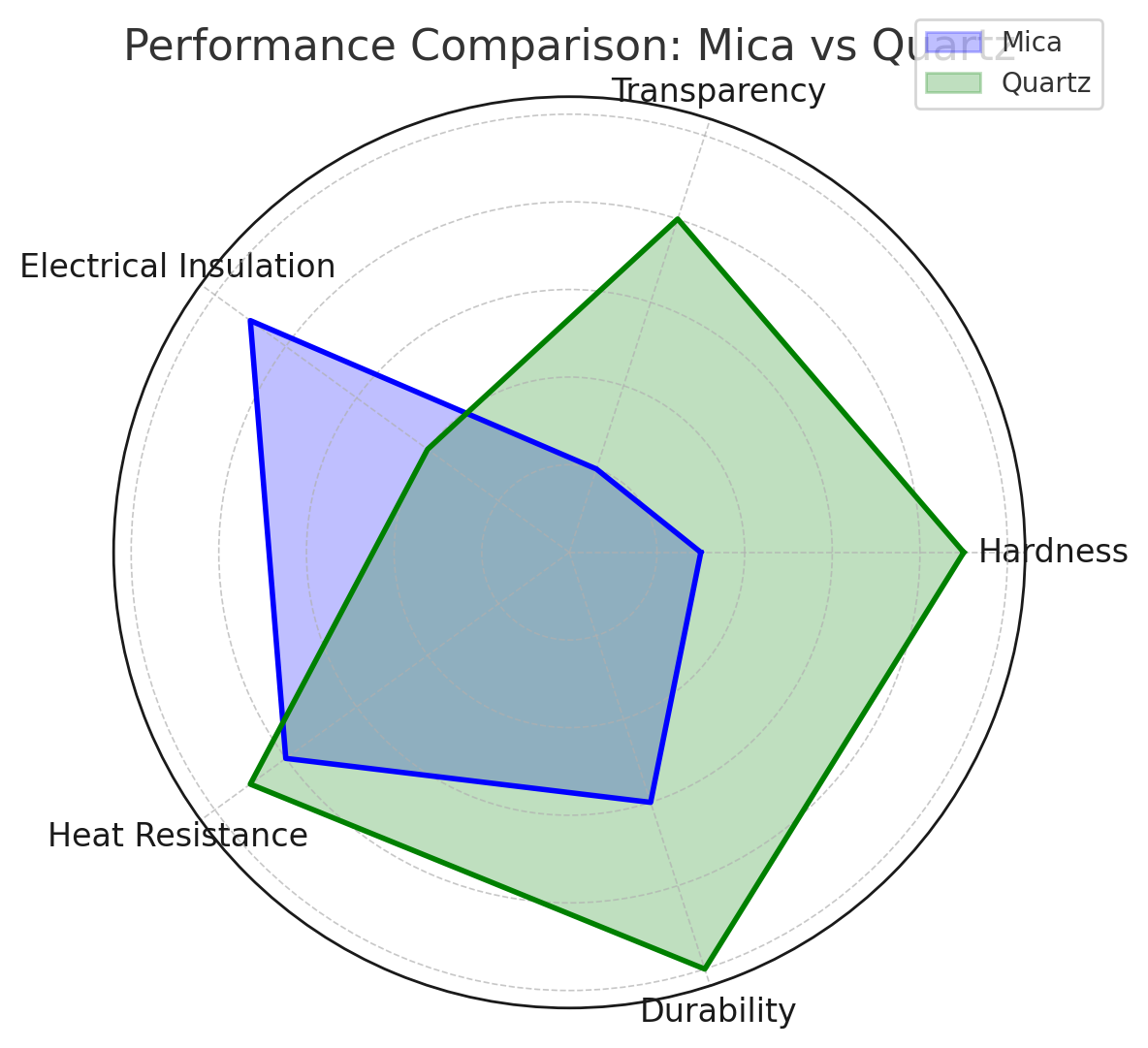
Hardness is one of the primary differences between mica and quartz. Quartz is significantly harder, with a Mohs hardness of 7, while mica has a much lower hardness, ranging between 2 and 3. This means quartz is more durable and resistant to wear, making it suitable for applications that require abrasion resistance. For example, quartz is used in durable building materials and optical lenses, while mica is better suited for insulation and electrical applications due to its softness.
Transparency and Optical Properties
Quartz has high transparency, particularly in its clear crystal form, which makes it an excellent material for optical lenses, laser devices, and solar cells. Quartz's optical properties also make it useful in precision optical instruments like microscopes.
In contrast, mica is typically semi-translucent or opaque, with a shiny surface that reflects light. While mica is not suitable for optical applications, its reflective properties are valuable in decorative materials and certain insulation applications, where light reflection is desirable.
Electrical Insulation and Heat Resistance
Mica is known for its excellent electrical insulation properties and high heat resistance, making it a valuable material in electrical and electronic industries. Mica is commonly used in capacitors, cables, transformers, and high-temperature electrical components.
Quartz, while it has good heat resistance, does not offer the same level of electrical insulation as mica. Quartz is often used in applications where high durability and chemical stability are required, but it is not typically chosen for its electrical insulating properties.
Mica vs Quartz: Applications
Mica Applications
Mica's unique properties make it an indispensable material in various industries. Some of its most common applications include:
Construction Materials: Mica is used to produce high-quality insulation materials, fire-resistant materials, and decorative coatings. Due to its excellent thermal insulation properties, mica is commonly used in building walls, roofs, and interior finishes.
Electronics Industry: Mica's electrical insulating properties make it ideal for use in electronic components like capacitors, wires, and transformers. Mica is also used in high-temperature devices due to its heat resistance.
Chemical Industry: Mica's moisture resistance makes it a valuable material in the production of certain chemicals, especially in humid or high-temperature environments where stability is crucial.
Quartz Applications
Quartz is an incredibly versatile mineral with many applications across various industries, including:
Construction Materials: Quartz is used in producing engineered stone, countertops, flooring, and other construction materials due to its durability, scratch resistance, and aesthetic appeal. Quartz surfaces are popular in kitchens and bathrooms because they are low-maintenance and highly durable.
Electronics and Optical Devices: Quartz's optical clarity makes it a key material in the production of optical lenses, lasers, and other high-precision equipment. Quartz is also used in the production of solar cells and other energy devices due to its stability and high thermal resistance.
Glass Manufacturing: Quartz glass is known for its excellent heat resistance, low thermal expansion, and chemical stability. It is used in a variety of applications, including laboratory glassware, semiconductor production, and high-temperature processes.
Mica vs Quartz: Cost and Availability
Mica Cost
Mica is relatively inexpensive, particularly in regions where it is abundant. Its relatively low extraction costs and widespread availability make it an affordable material for many industrial applications. However, high-purity mica can be more expensive, especially in specialized uses such as electronics and high-temperature applications.
Quartz Cost
Quartz is also widely available and relatively inexpensive, but its cost can vary depending on the purity and form of the material. Natural quartz is abundant and inexpensive, but high-quality, high-purity quartz used in optical and electronic applications can be costly. Additionally, the processing of quartz into specialized forms, such as synthetic quartz, can increase its price.
Mica vs Quartz: Which Should You Choose?
Reasons to Choose Mica
If your application requires excellent electrical insulation, high heat resistance, and moisture resistance, mica is the better choice. Mica is especially valuable in electronic and electrical industries, as well as in construction for insulation and fire-resistant materials.
Reasons to Choose Quartz
If you need a material that offers high durability, scratch resistance, and optical clarity, quartz is the ideal choice. Quartz is perfect for use in high-precision electronics, optical devices, and durable building materials like countertops and flooring.
Conclusion
Mica and quartz are both highly valuable minerals, each with unique advantages and applications. Mica is known for its electrical insulation properties, heat resistance, and versatility in construction, while quartz stands out for its hardness, transparency, and optical properties. Understanding the differences between these minerals will help you make informed decisions when selecting the right material for your project.
Both mica and quartz have broad applications in industries such as construction, electronics, and optics. The choice between the two depends on your specific needs, whether it's insulation, durability, transparency, or heat resistance.
FAQs
What are the main differences between mica and quartz?
Mica is softer and offers excellent electrical insulation and heat resistance, making it ideal for electrical and high-temperature applications. Quartz, on the other hand, is harder, more transparent, and used in optical devices and durable construction materials.
Which material is better for building insulation?
Related Blog
Related Downloads

Company Address: Wushi Industrial Park, Xingwang Road, Pingjiang High-tech Industrial Park, Wushi Town, Pingjiang County, Hunan Province


This website supports both IPv4 and IPv6 access.