
What to Look for in High Temperature Mica Sheets?
Published time:
2025-11-27 10:34
Source:


When you are dealing with industrial environments where temperatures soar well past the melting point of standard insulators, standard materials just don’t cut it. Whether you are engineering the next generation of electric vehicle batteries, managing a steel foundry, or simply repairing a high-end induction furnace, the material you choose for thermal insulation isn't just a detail—it is the difference between operational success and catastrophic failure. This is where high-temperature mica sheets come into play. These unsung heroes of the thermal management world offer a unique combination of dielectric strength and extreme heat resistance that few other materials on Earth can match.
In this comprehensive guide, we are going to walk you through everything you need to know about sourcing, selecting, and applying high-temperature mica sheets. We will break down the complex mineralogy into actionable buying advice, ensuring that you get exactly the right specifications for your extreme heat application.
Understanding the Basics: What Exactly is a Mica Sheet?
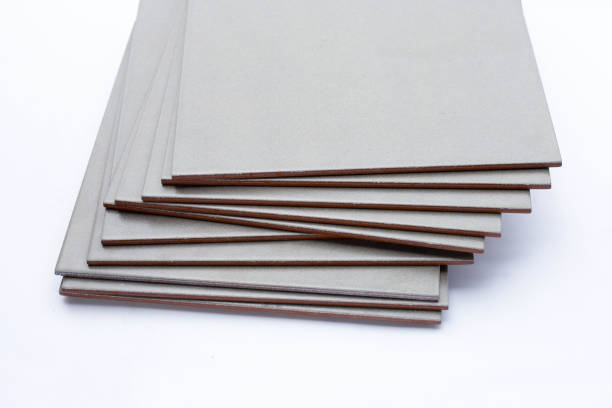
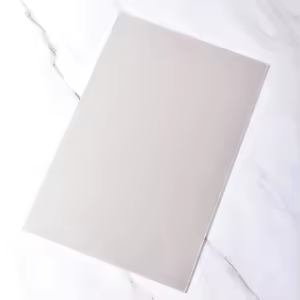


At its core, a mica sheet is a triumph of both nature and engineering. Mica itself is a naturally occurring silicate mineral, famous for its perfect basal cleavage. This means it can be split into incredibly thin, flexible films—some as thin as a fraction of a millimeter—while retaining immense tensile strength across the plane. To create the industrial-grade sheets you see on the market, manufacturers take these natural mica splittings (or mica paper) and bond them together using high-performance resins, typically silicone-based, which are then pressed under high heat and pressure.
The result is a material that feels like a hard plastic or a stiff cardboard (depending on the grade) but behaves like a ceramic when exposed to heat. Unlike plastics that melt or ceramics that crack under thermal shock, mica sheets maintain their structural integrity even when exposed to direct flames or temperatures exceeding 1000°C (1832°F). They are non-combustible, meaning they won't catch fire, and they don't conduct electricity, making them the perfect barrier for high-voltage equipment running at high temperatures.
When you are buying mica sheets, you aren't just buying a "sheet"; you are buying a composite material. The quality of the final product depends heavily on the quality of the raw mica ore and the sophistication of the binder system used. Cheap binders will burn off rapidly, causing the sheet to delaminate or crumble, while high-quality silicone resins will calcify into a ceramic-like bond that holds the mica flakes together even after the organic components have carbonized. Understanding this composite nature is step one in becoming a smart buyer.
The Two Giants: Muscovite vs. Phlogopite Mica
The most critical distinction you will face when browsing catalogs or talking to suppliers is the choice between Muscovite and Phlogopite mica. While they are both "mica," they are chemically distinct minerals with different performance envelopes. Confusing the two is the most common mistake buyers make, often leading to overspending on unnecessary electrical properties or under-speccing on thermal resistance.
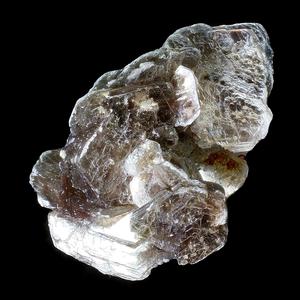
Muscovite (White Mica) is the most common form. It is typically white, ruby, or clear in color. Muscovite is prized primarily for its electrical properties. It has superior dielectric strength, meaning it is a fantastic electrical insulator. However, its thermal limit is lower than its counterpart. Muscovite sheets typically handle continuous operating temperatures up to 500°C to 700°C (932°F - 1292°F). Above this threshold, it begins to lose its chemically bound water (calcination), causing it to swell, whiten, and lose mechanical strength. It is the go-to choice for electrical equipment like toasters, microwave ovens, and lower-temperature industrial heaters where electrical insulation is the priority.
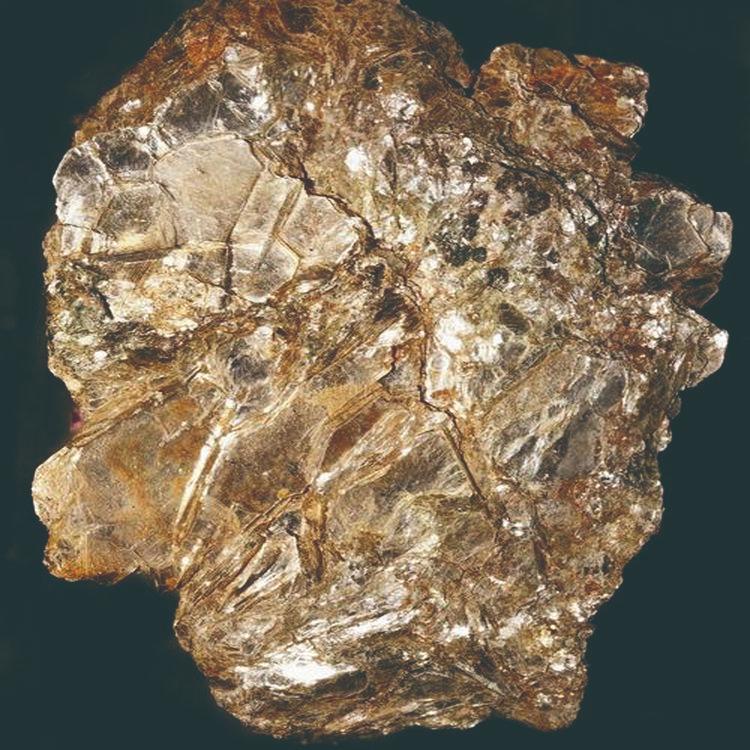
Phlogopite (Green or Amber Mica) is the heavy hitter for heat. Usually green, brown, or amber in hue, Phlogopite is softer than Muscovite but significantly more heat-resistant. It remains stable at continuous temperatures ranging from 700°C to 1000°C (1292°F - 1832°F). If your application involves direct flame contact, furnace linings, or exhaust manifolds, Phlogopite is the mandatory choice. While its electrical insulation properties are slightly lower than Muscovite, they are still sufficient for most industrial applications. Choosing Phlogopite ensures that your insulation won't degrade rapidly in the fiercest heat zones.
Comparison: Muscovite vs. Phlogopite
Feature | Muscovite (White/Ruby) | Phlogopite (Green/Amber) |
Color | White, Clear, Ruby | Green, Amber, Dark Brown |
Max Continuous Temp | ~500°C - 700°C | ~700°C - 1000°C |
Hardness | Harder, more rigid | Softer, more flexible |
Dielectric Strength | Excellent (>20 kV/mm) | Good (~15-18 kV/mm) |
Primary Use Case | Electrical insulation, domestic appliances | Heavy industry, furnaces, fire protection |
Cost | Generally higher for high-grade ruby | Often more cost-effective for bulk thermal use |
Rigid vs. Flexible: Choosing the Right Form Factor
Once you have selected your mineral type, you must decide on the form factor: Rigid or Flexible. This isn't just about whether the sheet can bend; it’s about how the sheet is manufactured and the ratio of binder to mica.
Rigid Mica Sheets are engineered for structural strength. They are produced with a lower binder content or a different curing process that results in a hard, plate-like material. These sheets are unyielding and are designed to be machined, drilled, and cut into specific shapes. They are often used to build self-supporting insulation structures, such as heater banks, furnace floor plates, or spacers in high-voltage machinery. When you hold a rigid mica sheet, it feels solid, almost like a slate tile. The rigidity allows it to bear weight, which is crucial if you are building a furnace floor that needs to support heavy crucibles or heating elements.
Flexible Mica Sheets, on the other hand, are designed to wrap and wind. They often have a slightly higher binder content or use a more flexible silicone resin that remains pliable at room temperature. These sheets can be rolled into cylinders, wrapped around cables, or used to line curved induction furnaces. Flexible sheets are often reinforced with glass fiber mesh on one or both sides to prevent tearing during installation. If your application requires the insulation to conform to a curved surface—like wrapping an exhaust pipe or lining a ladle—rigid sheets will simply snap. Flexible mica is the solution here, acting as a thermal blanket that hugs the contours of your equipment.
Critical Technical Properties to Evaluate
When you are looking at a datasheet for a mica sheet, there are three specific numbers you need to scrutinize: Dielectric Strength, Thermal Conductivity, and Binder Content. Ignoring these can lead to a mismatch between the material's capability and your system's demands.
Dielectric Strength is the measure of the material's ability to resist electrical breakdown under voltage. For high-voltage applications, such as insulating busbars or components in power plants, this is your most important metric. High-quality mica sheets should offer a breakdown voltage of at least 20 kV/mm. If the datasheet shows a significantly lower number, it suggests the mica flakes are poor quality or the binder distribution is uneven, creating "pinholes" where electricity can arc through.
Thermal Conductivity in insulation needs to be low. You want the heat to stay on one side of the sheet. Mica is naturally excellent at this, with typical values around 0.2 to 0.3 W/m·K. This low conductivity allows a relatively thin sheet (e.g., 5mm) to create a massive temperature drop, protecting sensitive electronics or outer casings from the intense heat of the core process.
Binder Content is the tricky one. While the binder holds the sheet together, it is organic. When the sheet is first heated, the binder will "off-gas" or smoke as it decomposes. A high binder content makes the sheet stronger at room temperature but produces more smoke during the initial burn-in. For applications in enclosed spaces or clean rooms, you want a "low smoke" or "smoke-free" grade where the binder content is minimized or chemically altered to reduce emissions.
Major Industrial Applications for Mica Sheets
The versatility of mica sheets sees them deployed across a fascinating array of industries. Understanding how others use these materials can help you identify if they are right for your project.
· Foundry and Steel Industry: In induction furnaces, flexible mica sheets are used as a "slip plane." They are placed between the coil grout and the refractory lining. When the furnace heats up, the refractory lining expands. The smooth, waxy surface of the mica sheet allows the lining to expand and contract without cracking the expensive induction coils behind it. It also acts as a final barrier; if the molten metal eats through the lining, the mica sheet triggers the ground-leak detector, shutting down the furnace before a catastrophic breakout occurs.
· Aerospace and Automotive: As electric vehicles (EVs) push for higher ranges, thermal runaway in batteries is a major safety concern. Mica sheets are now extensively used as thermal barriers between battery cells. If one cell catches fire, the mica sheet blocks the heat from propagating to the neighbor, preventing a chain reaction. In aerospace, lightweight phlogopite sheets serve as heat shields for thrust reversers and auxiliary power units, replacing heavier metallic shields.
· Consumer Appliances: If you take apart a toaster or a hair dryer, you will find mica. In a toaster, the heating wire is wound directly around a rigid muscovite mica plate. The mica supports the red-hot wire without melting and prevents the electricity from shocking the metal casing. Its non-toxic nature and zero-flammability make it the standard for home safety.
Buyer’s Guide: Evaluating Temperature Ratings
One of the most confusing aspects of buying mica sheets is the temperature rating. Suppliers often list multiple numbers, and knowing which one applies to you is vital. You will typically see "Continuous Temperature" and "Peak" or "Short-Term Temperature."
Continuous Temperature is the maximum temperature the material can withstand indefinitely without degrading. For Muscovite, this is usually 500°C; for Phlogopite, 700°C. If your furnace runs at 800°C 24/7, and you use Muscovite, the sheet will eventually dehydrate, turn to powder, and fail. You must select a material where your normal operating temperature is below this continuous rating.
Peak Temperature is a higher value, often 100°C to 200°C above the continuous rating. This represents the material's ability to survive short spikes in heat—perhaps during a process startup or a malfunction—without immediate failure. Do not design your system to run at the peak temperature. It is a safety margin, not an operating target. Always buy based on the continuous rating to ensure longevity.
Analyzing Thickness and Dimensional Tolerances
Mica sheets are available in a massive range of thicknesses, typically starting from ultra-thin 0.1mm foils up to thick 100mm blocks (which are laminated layers).
For insulation wrapping (flexible sheets), thicknesses of 0.2mm to 0.5mm are standard. This provides enough dielectric strength while remaining flexible enough to bend around a small radius.
For structural rigid plates, typical thicknesses range from 2mm to 50mm. When buying rigid plates, pay close attention to the thickness tolerance. Because mica sheets are pressed laminates, achieving precise thickness is difficult. Standard commercial tolerances can be +/- 0.05mm for thin sheets, but can go up to +/- 0.5mm or more for thick boards. If your assembly requires high precision, you may need to sand or machine the sheet to the final dimension yourself, or pay a premium for "sanded both sides" calibration from the factory.
The Importance of Binder Content and Smoke Emission
We touched on this earlier, but it deserves a detailed look for safety compliance. The silicone resin binder is the only non-mineral part of the sheet. In standard industrial grades, the binder might make up 10-15% of the weight.
When you install a new mica sheet in a furnace and turn it on for the first time, you will see smoke. This is the binder curing and organic volatiles burning off. In a well-ventilated foundry, this is a minor nuisance. However, in a closed environment, like a laboratory oven or a residential heater, this smoke can be acrid and alarming.
If smoke is a concern, look for "Calcined" or "Low-Smoke" grades. In these variants, the mica paper has been heat-treated to remove impurities, and the binder chemistry is optimized to produce minimal off-gassing. Alternatively, some users perform a "burn-in" cycle outdoors or under an extraction hood before the final installation of the component.
Machining and Cutting Mica Sheets
Rigid mica sheets are notoriously abrasive. The silicate minerals are harder than many standard steel cutting tools. If you try to cut a rigid mica board with a standard wood saw, you will dull the blade in minutes.
· Cutting: Use carbide-tipped tools or diamond-impregnated blades. For thin sheets, bandsaws with metal-cutting blades work well. For complex shapes, water-jet cutting is the gold standard as it produces no dust and puts no thermal stress on the material. Laser cutting can be used but may cause charring on the edges due to the binder.
· Drilling: When drilling holes, it is crucial to support the sheet from the back. Mica has a layered structure; if you push a drill bit through without backing, the bottom layers will "blow out" or delaminate, leaving a messy, weak hole. Use high-speed steel (HSS) or carbide drills and a slow feed rate to prevent delamination.
· Dust Safety: Machining mica produces fine dust. While mica itself is generally considered less hazardous than asbestos (which it often replaces), inhaling fine silicate dust is never good for your lungs. Always wear a respirator and use active dust extraction when machining mica.
Storage and Shelf Life Considerations
Believe it or not, mica sheets can "go bad" if stored improperly, particularly the flexible grades.
Flexible sheets rely on the resin remaining pliable. If stored in a hot, dry warehouse for years, the resin can cure or dry out, causing the sheet to become brittle. When you finally go to unroll it, it might crack. Flexible mica should typically be used within 6 to 12 months of manufacture and stored in a cool, dry place away from direct sunlight.
Rigid sheets are indefinitely stable regarding their mechanical properties, but they are hygroscopic—they can absorb moisture from the air. If a damp mica board is suddenly thrown into a 1000°C furnace, the trapped water will turn to steam instantly, potentially causing the board to explode or delaminate. Always store rigid mica in a dry environment, and if in doubt, "bake out" the sheets at a lower temperature (e.g., 150°C) for a few hours to remove moisture before high-heat use.
Certifications and Safety Standards
In today's regulated market, the raw performance of the material isn't enough; you need the paperwork to prove it. When sourcing high-temperature mica, especially for consumer goods or electronics, look for these key certifications:
· UL 94 V-0: This is the standard for flame retardancy. A V-0 rating means that if the material is exposed to a vertical flame, self-extinguishing occurs within 10 seconds. Most high-quality mica sheets meet this easily, as they are inherently non-combustible.
· RoHS and REACH: These are European Union regulations concerning hazardous substances. Since mica sheets replaced asbestos, they are generally compliant, but you must ensure the binder doesn't contain restricted heavy metals or toxic chemicals.
· IEC Standards: For electrical applications, compliance with IEC 60371 (Specification for insulating materials based on mica) ensures consistency in dielectric strength and thickness.
Cost Factors: What Influences the Price?
Why does one mica sheet cost $10 and another $50? Several factors drive the price:
1. Mineral Purity: High-grade Muscovite (Ruby mica) is rarer and more expensive than standard Phlogopite.
2. Lamination Quality: Sheets with higher density and fewer voids require more press time and higher pressure, increasing manufacturing costs.
3. Surface Finish: A standard "mill finish" is cheaper. A sanded, calibrated finish with tight thickness tolerances requires an extra processing step.
4. Reinforcement: Flexible sheets reinforced with high-grade glass fiber cloth or ceramic felt will command a premium over unreinforced mica paper.
Comparing Mica to Alternatives
Mica is not the only player in the high-temp game. How does it stack up against the competition?
· Vs. Ceramic Fiber Board: Ceramic fiber can withstand even higher heat (up to 1200°C+) and is a better thermal insulator (lower conductivity). However, it is soft, crumbly, and has no structural strength. You can't screw a component onto a ceramic fiber board; you can on a rigid mica board.
· Vs. Asbestos: Mica is the direct modern replacement for asbestos boards. It offers similar heat resistance and electrical insulation without the carcinogenic health risks.
· Vs. PTFE (Teflon): PTFE is great for chemical resistance and low friction, but it melts around 260°C. Mica operates in a completely different thermal league.
Visualizing the Thermal Hierarchy
The following chart illustrates where Mica sits in the hierarchy of industrial insulation materials regarding maximum continuous service temperature.
Material | Max Temp (°C) | Max Temp (°F) | Characteristics |
PTFE / Nylon | ~250°C | ~482°F | Melts, plastic-like |
Muscovite Mica | 500°C | 932°F | Rigid/Flex, excellent electrics |
Phlogopite Mica | 700°C - 1000°C | 1292°F - 1832°F | High heat, robust, darker color |
Ceramic Fiber | 1260°C+ | 2300°F+ | Soft, wool-like, no structure |
How to Source High-Quality Mica Sheets
When you are ready to buy, don't just click "add to cart" on the first generic industrial supply site. For critical applications, engage with specialized insulation distributors.
Ask for samples. A reputable supplier will send you a small swatch. Test it. Try to bend it (if flexible) to see if it cracks. Hold a flame to it (safely) to check for binder smoke and delamination. Inspect the edges of rigid boards; they should be tight and solid, not flaking apart like a cheap pastry.
Check the packaging. Mica is fragile. Rigid boards should be packed in crates to prevent corner damage. Flexible rolls should be suspended in the box or wrapped heavily to prevent crushing. Shipping damage is the number one cause of waste with mica products.
Conclusion: Making the Final Decision
Selecting the right high-temperature mica sheet is a balance of thermal limits, electrical needs, and mechanical form. If your application is a high-voltage heater bank running at 400°C, Rigid Muscovite is your best friend. If you are lining the coil of a 10-ton steel foundry furnace, Flexible Phlogopite is the only responsible choice.
By understanding the fundamental differences between the mineral types, checking the binder quality, and respecting the installation requirements, you ensure the safety and efficiency of your high-heat application. Mica is an ancient mineral, but in the world of modern high-temperature engineering, it remains cutting-edge technology. Choose wisely, handle it with care, and it will protect your equipment in the most extreme conditions imaginable.
Choose YuefengMica for all your Mica Product needs and experience the benefits of superior insulation and protection in your high-temperature applications.
Previous Page
Related Blog
Related Downloads

Company Address: Wushi Industrial Park, Xingwang Road, Pingjiang High-tech Industrial Park, Wushi Town, Pingjiang County, Hunan Province


This website supports both IPv4 and IPv6 access.